I. Core Application Fields of Axial Flux Motor PCBs
With the core characteristics of high power density and compact structure, axial flux motors have their supporting PCBs (Printed Circuit Boards) as the core components of motor stators, which have been deeply penetrated into multiple high-end manufacturing fields. They are especially suitable for scenarios requiring limited space, light weight and high precision. The core applications are as follows:
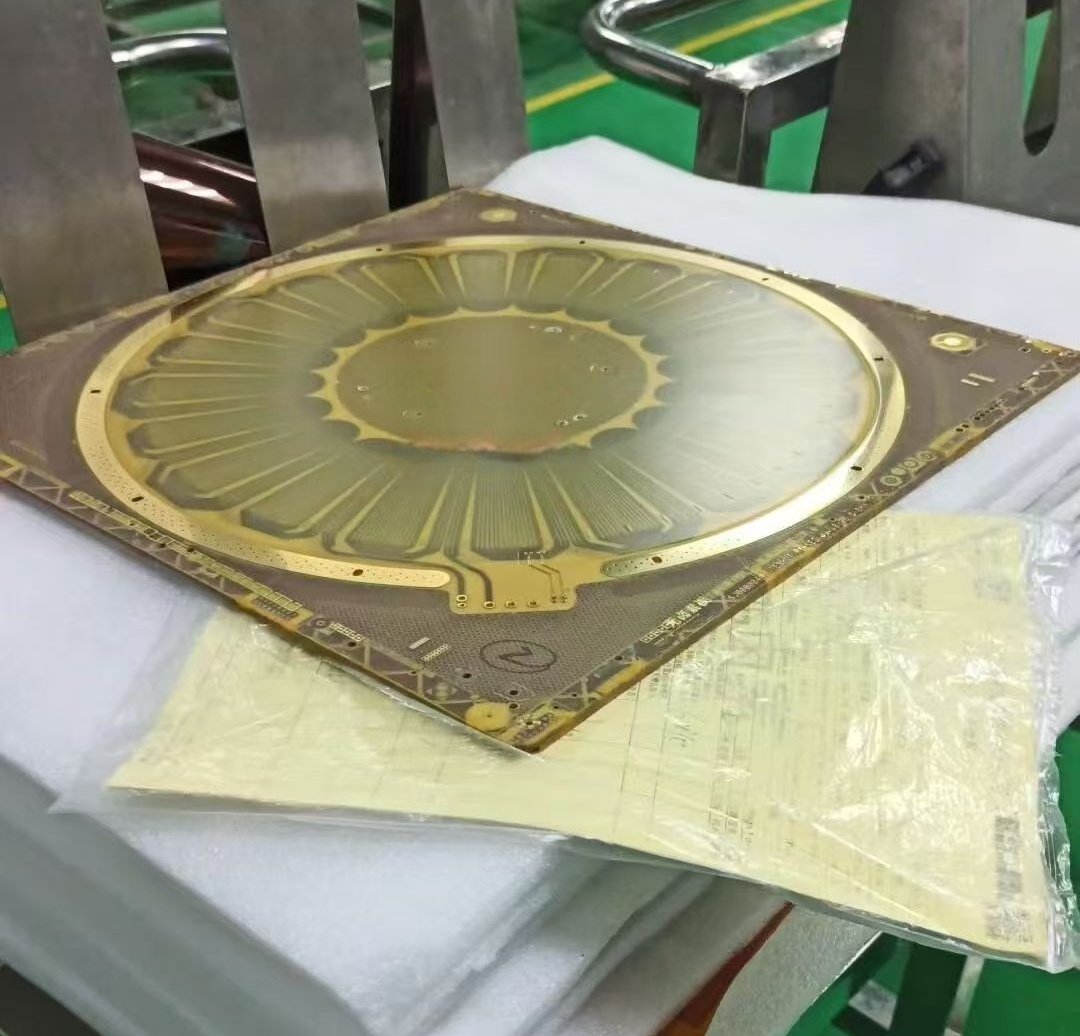
1. New Energy Transportation Field
As the core drive component of new energy vehicles (especially electric supercars and light electric vehicles), electric buses and electric trucks, Axial Flux Motor PCBs can realize motor miniaturization and light weight, adapt to scenarios with limited on-board space, and improve power output efficiency. In addition, in eVTOL (Electric Vertical Take-Off and Landing) aircraft, the application of PCB stators with their lightweight advantages provides key support for improving aircraft endurance and optimizing load capacity. Domestic enterprises have realized test flights of all-electric rotorcraft based on this technology.
2. High-End Equipment and Robotics Field
Suitable for high-precision drive scenarios such as quadruped robots and industrial robot joints, Axial Flux Motor PCBs support fast motor response and high torque density output, which can meet the needs of frequent swing, high-speed start and stop of robot joints. For example, the axial magnetic field integrated electric drive joint developed by Shenzhen Xiaoxiang Electric, after integrating the PCB stator, has a total weight of only 1.2kg and a peak output torque of up to 150N.m. At the same time, in military defense equipment, its high reliability and anti-interference ability can adapt to drive needs in extreme environments.
3. New Energy and Special Equipment Field
In the field of wind power generation, using the high torque characteristics of PCB stator motors, megawatt-level power output can be achieved. For example, the PCB stator wind turbine launched by Boulder Wind Power in 2012 has an output power of 3 megawatts, a torque of more than 2 million Newton-meters, and excellent operational stability. In the field of medical equipment, in micro-drive equipment such as artificial hearts, the coreless design, light weight and low loss characteristics of PCB stators can meet the core needs of equipment miniaturization and long endurance.
4. Industrial and Consumer Electronics Field
It is suitable for scenarios such as industrial frequency converters, precision fans and HVAC system fan drives. The high efficiency of PCB stators can reduce energy consumption; in high-end consumer electronics, PCBs supporting micro axial flux motors can be used for driving UAVs and portable equipment, achieving a balance between miniaturization and high performance.
II. Core Advantages of Axial Flux Motor PCBs
Compared with traditional radial flux motor PCBs and conventional wire-wound stators, Axial Flux Motor PCBs have the following irreplaceable advantages relying on their unique structural design and manufacturing process, which are also the core driving forces for their rapid popularization:
1. Lightweight, Miniaturized, and Outstanding Power Density
Adopting a coreless structure, replacing traditional iron cores and copper wire windings with PCBs can greatly reduce the overall weight of the motor. The stator core accounts for about two-thirds of the weight of traditional motors, and the application of PCB stators can completely get rid of this weight burden. At the same time, the axial flux design makes the magnetic flux path shorter and more direct. Combined with the compact layout of PCB windings, the motor volume can be reduced by 30%-50%, and the power density is increased by more than 30% compared with traditional radial flux motors. Under the constraints of the same materials and output performance, the weight of axial flux motors is significantly lower, and the torque density of the PCB stator version can be further improved.
2. High Efficiency, Low Loss, and Stronger Stability
The coreless design completely eliminates hysteresis and eddy current losses, and the motor efficiency can usually exceed 96%, which greatly reduces energy consumption, especially suitable for scenarios with high requirements for endurance and energy efficiency (such as new energy vehicles and UAVs). At the same time, PCB windings are manufactured through automated etching processes, with high line consistency, which can avoid problems such as coil sagging and poor end connection that occur in traditional wire-wound windings, reduce potential faults, have a longer service life, and lower operating noise, adapting to the needs of precision equipment.
3. Flexible Design, Adapting to High-Complexity Requirements
PCB windings can be directly etched on the substrate, and the shape and structure of the coils are flexible in design. The winding layout can be customized according to the motor size and power requirements, and it can also be directly fixed to the motor housing, easily meeting the thin and customized needs in special scenarios. In addition, the multi-layer PCB design can reduce electromagnetic interference, improve signal stability and durability, optimize thermal management and electromagnetic compatibility, and adapt to high-complexity and high-reliability high-end application scenarios (such as military and medical). However, the number of layers needs to be reasonably controlled to avoid increasing the air gap length, reducing the magnetic flux density and pushing up costs.
4. Mature Process and High Mass Production Efficiency
Relying on the mature automated production process of PCBs, batch etching and assembly of windings can be realized. The production efficiency is much higher than that of traditional manual or mechanical winding processes, and the yield rate is controllable (up to more than 99.8%), which can meet the needs of large-scale mass production and reduce manufacturing costs at the same time, especially suitable for large-scale application scenarios such as new energy vehicles and industrial robots.
5. Excellent Thermal Management, Adapting to Extreme Environments
The PCB substrate has good heat dissipation performance, which can quickly export the heat generated during motor operation to avoid overheating damage. Combined with the structural advantage of the axial flux motor with double stators and single rotor, the heat dissipation capacity is further improved, which can adapt to the extreme working environment of -40℃~150℃, meet the use needs of harsh scenarios such as military, automotive and outdoor equipment, and reduce the performance loss of permanent magnets caused by high temperature.
III. Industry Development Trends of Axial Flux Motor PCBs
With the rapid development of new energy, high-end equipment, artificial intelligence and other fields, the market demand for axial flux motors continues to rise, driving the supporting PCB industry to upgrade towards high precision, high reliability and customization. The core trends are as follows:
1. High Power and High Precision Become the Core Direction
The market's demand for motor power and precision continues to increase, promoting the upgrading of Axial Flux Motor PCBs towards thick copper, high density and microvia. The reasonable optimization of copper foil thickness (usually the maximum thickness of a single layer of winding copper plating is 0.175mm, which can be larger in special scenarios) can improve output power and efficiency. At the same time, microvia technology (aperture ≤0.1mm) and fine line width and spacing (2mil/2mil) can further improve winding density, adapt to the needs of megawatt-level high-power motors and micro-precision motors, and meet the impedance control accuracy requirements (±3Ω) to support the development of high-power density motors.
2. Material Upgrade to Adapt to Diversified Scenarios
According to the needs of different application scenarios, PCB materials are upgraded to specialization: in the new energy vehicle field, high Tg, high temperature resistance and corrosion resistance FR4 materials are focused on to ensure long-term high-temperature operation stability; in the military and aviation fields, high-frequency and high-speed materials are adopted to improve anti-interference ability; in the medical and micro-equipment fields, lightweight and low-loss flexible PCB materials are selected to adapt to miniaturization and wearable needs. At the same time, the exploration of rare earth-free excitation technology promotes the application of PCB stators in electrically excited axial flux motors, reducing dependence on rare earth materials, lowering costs and improving supply chain stability.
3. The Trend of Integrated Integration is Highlighted
In the future, Axial Flux Motor PCBs will gradually realize the integrated integration of "PCB stator + drive circuit + heat dissipation structure", reducing the number of components, further reducing the motor volume, lowering assembly complexity, and improving the overall reliability and cost performance of the motor. At the same time, the integration with sensors and controllers can realize real-time monitoring and intelligent regulation of motor operation status, adapting to the development needs of intelligent equipment. For example, the integrated electric drive module of robot joint motors integrates PCB stators, reducers and drivers, improving integration and ease of use.
4. Continuous Expansion of Application Scenarios and Rapid Growth of Market Scale
With the increase in the penetration rate of new energy vehicles, the acceleration of localization of industrial robots, and the rise of the eVTOL aircraft and new energy power generation industries, the application scenarios of Axial Flux Motor PCBs will continue to expand, penetrating from high-end equipment to mid-end manufacturing fields. According to market forecasts, the global axial flux motor market will maintain steady growth from 2024 to 2030, with Asia-Pacific, North America and Europe as the core markets, driving the synchronous growth of supporting PCB demand. Among them, the new energy transportation and industrial robot fields will become the core driving forces for demand growth, and the market scale is expected to achieve leapfrog growth.
5. Process Innovation Drives Cost Optimization
Aiming at the previous misunderstanding that "PCB stators are only suitable for low-power scenarios", the industry has achieved breakthroughs in high-power scenarios through process innovation. At the same time, through the upgrading of automated production and the optimization of material costs, the manufacturing cost of Axial Flux Motor PCBs is gradually reduced, breaking the price barrier, promoting their popularization in more mid-end application scenarios, and accelerating the replacement of traditional wire-wound stators and radial flux motor PCBs.


