The UWB coal mine personnel positioning system has an efficient architecture. UWB base stations, tags, and communication protocols collaborate for precise positioning. Based on signal flight time calculation, its engine shows positions in real time. It offers real-time tracking, electronic fencing, SOS alerts, call functions, trajectory storage, and attendance collaboration. Technologically, UWB has notable advantages.
A Wise Choice for Work Safety: UWB-based Coal Mine Personnel Positioning System with Electronic Fence Function
I. Policy-driven: An Inevitable Choice under New Coal Mine Safety Regulations
In the coal mine industry, work safety has always been a top priority. With technological advancements and the continuous improvement of safety standards, relevant policies and regulations have imposed stricter and more detailed requirements on coal mine personnel positioning systems. The "AQ 1119—2023 General Technical Conditions for Personnel Positioning Systems in Coal Mine Underground," which came into effect on August 20, 2023, serves as a clear directive, emphasizing that coal mine safety production must be equipped with personnel positioning facilities that comply with coal mine safety standards. This standard aims to promptly detect abnormal personnel positions through precise positioning, thereby preventing and reducing the occurrence of safety accidents.
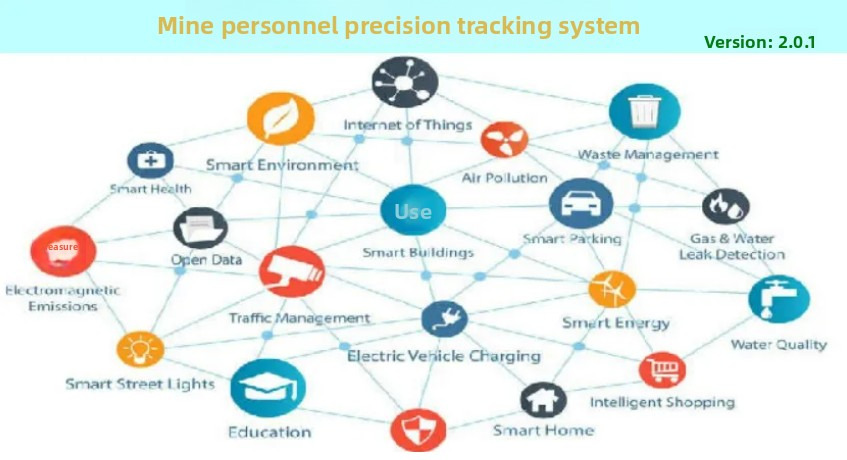
In 2024, policies have been further refined and upgraded. Shanxi Province took the lead by explicitly requiring that key locations such as heading faces must be equipped with electronic fence functions, implemented through various advanced technologies including lidar, UWB, and video analysis. Other provinces like Guizhou have quickly followed suit, creating a powerful policy wave that drives the upgrading of coal mine personnel positioning systems. Against this backdrop, traditional coal mine personnel positioning methods can no longer meet the new regulatory requirements. The UWB-based personnel positioning system with electronic fence function has thus emerged as an inevitable choice to safeguard coal mine safety production.
II. System Architecture: A Precise Positioning Network Fusing Technologies
The UWB personnel positioning system developed by FR4PCB.TECH has constructed a highly technological and efficient positioning network. Comprising core elements such as UWB base stations, UWB tags, and communication protocols, the system works collaboratively to achieve real-time and precise positioning of personnel and assets underground.

UWB Base Stations: The Cornerstone of Intelligent Positioning
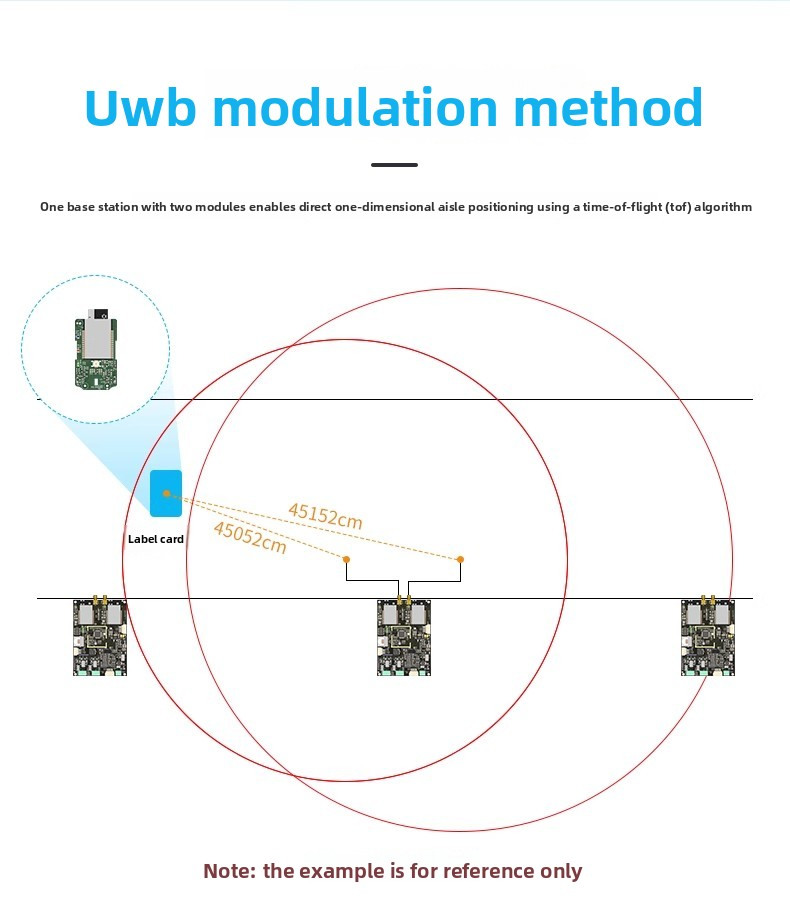
UWB base stations are the key nodes of the entire system. A single base station board ingeniously integrates two base station modules, enabling one-dimensional positioning with a single base station. This design significantly reduces the number of base stations required, lowering deployment costs and complexity. Moreover, the base stations can automatically interconnect once powered on, eliminating the need for cumbersome configuration processes and greatly enhancing system deployment efficiency. In terms of interfaces, the base station board offers multiple options such as TTL/485/Rj45, facilitating seamless integration with various back-end systems, whether existing coal mine monitoring systems or newly built intelligent management platforms, ensuring smooth data transmission and stable system operation.
UWB Tags: The "Identity Badges" for Personnel and Assets
The UWB positioning tags equipped for personnel and assets underground serve as their "electronic identity cards." Once personnel or items wear the positioning tags, the tags emit positional data using UWB pulse signals. These data contain the unique identification and real-time location information of the tags, serving as the critical data source for the system to achieve precise positioning.
Communication Protocols: The "Bridge" for Data Transmission
Communication protocols play a crucial role as the "bridge" for data transmission. They define the format, rules, and procedures for data transmission between UWB base stations, UWB tags, and back-end systems, ensuring accurate and timely data transfer among various components. Through stable communication protocols, the system enables real-time and efficient data interaction, providing a solid foundation for precise positioning and the application of various functions.
III. Working Principle: Precise Calculation Based on Signal Flight Time
In tunnel positioning systems, the working principle of the UWB personnel positioning system is based on precise calculation of signal flight time. When the positioning tags worn by personnel or items emit UWB pulse signals, nearby positioning base stations promptly receive these signals. Since signals propagate at a speed close to the speed of light in the air, by measuring the flight time of the signals from the tags to the base stations and combining it with the known signal propagation speed, the distance between the tags and the base stations can be accurately calculated.
The positioning engine, acting as the "intelligent brain" of the system, collects distance data between different base stations and tags. Through complex calculations and analysis of these distance data, combined with the three-dimensional coordinate information of the base stations, the positioning engine can precisely calculate the current position of the tags and display the location information in real-time on the monitoring screen. This way, monitoring personnel can always grasp the real-time positions of personnel and assets underground, achieving comprehensive control over the underground situation.
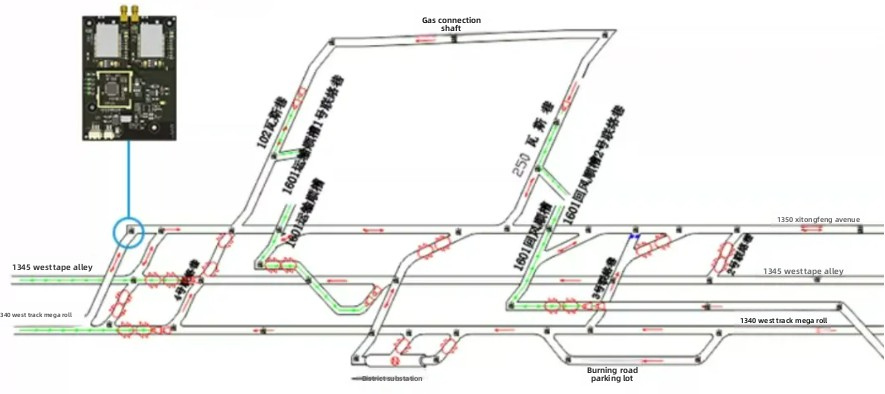
It should be noted that in practical applications, one-dimensional positioning generally suffices for coal mine safety standard personnel positioning solutions. However, at locations where mine tunnels have bends or turns, the signal propagation path may change, potentially affecting positioning accuracy. Therefore, it is necessary to appropriately increase UWB base stations for positioning compensation to ensure precise positioning in these special areas.
IV. Functional Highlights: Comprehensive Safety Guarantees
Real-time Personnel Positioning: The "Clairvoyant Eyes" for Dynamic Tracking
The system boasts a powerful real-time personnel positioning function, acting like a pair of "clairvoyant eyes" for monitoring personnel. By continuously tracking personnel positions, monitoring personnel can grasp their dynamics anytime and anywhere, regardless of their location underground. Meanwhile, the system supports querying personnel positions by card number, name, and other means, providing convenience and speed. For example, when searching for a specific staff member, simply entering their card number or name in the system can quickly locate their position, significantly improving work efficiency.
Electronic Fence: The "Invisible Fence" around Hazardous Areas
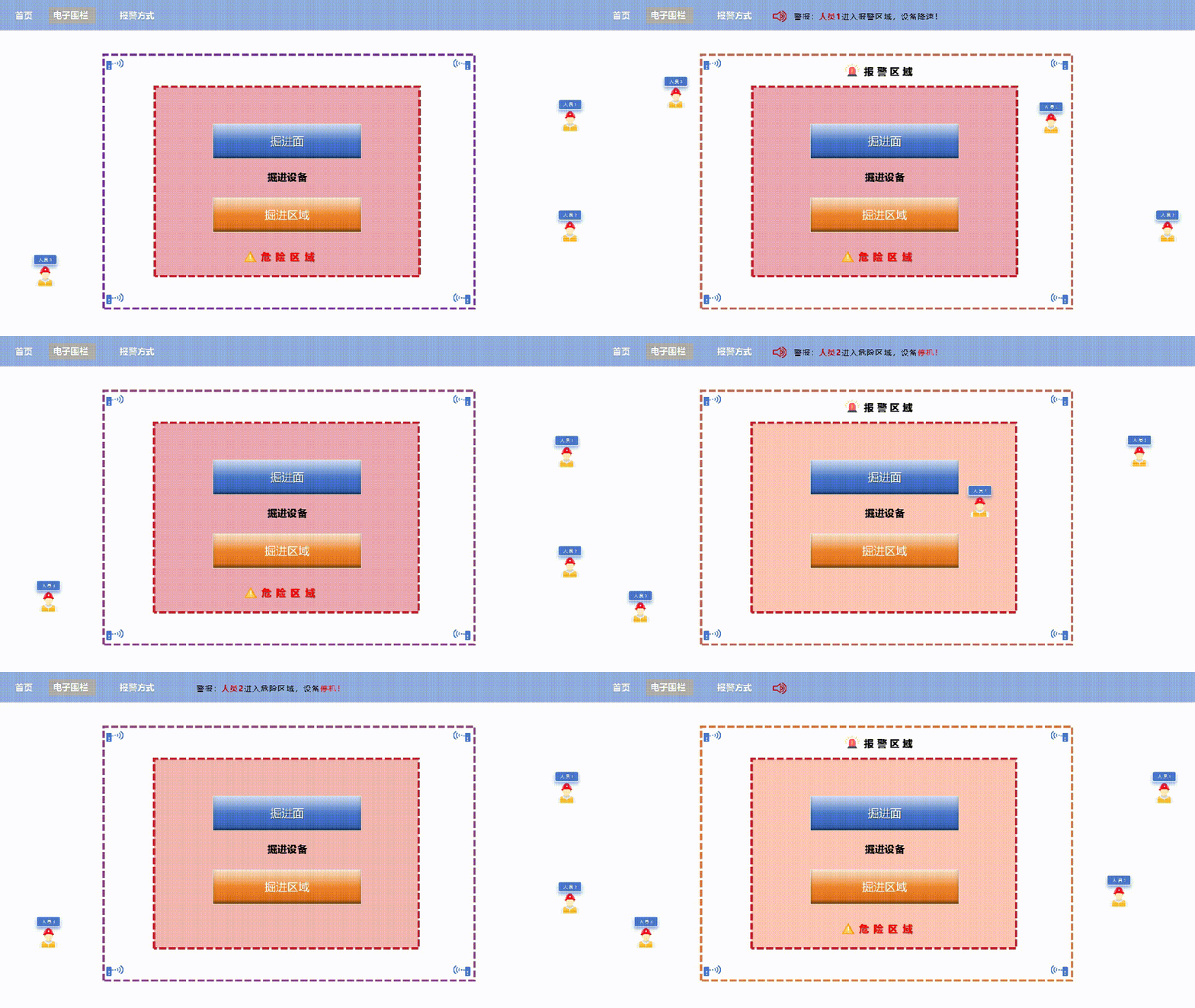
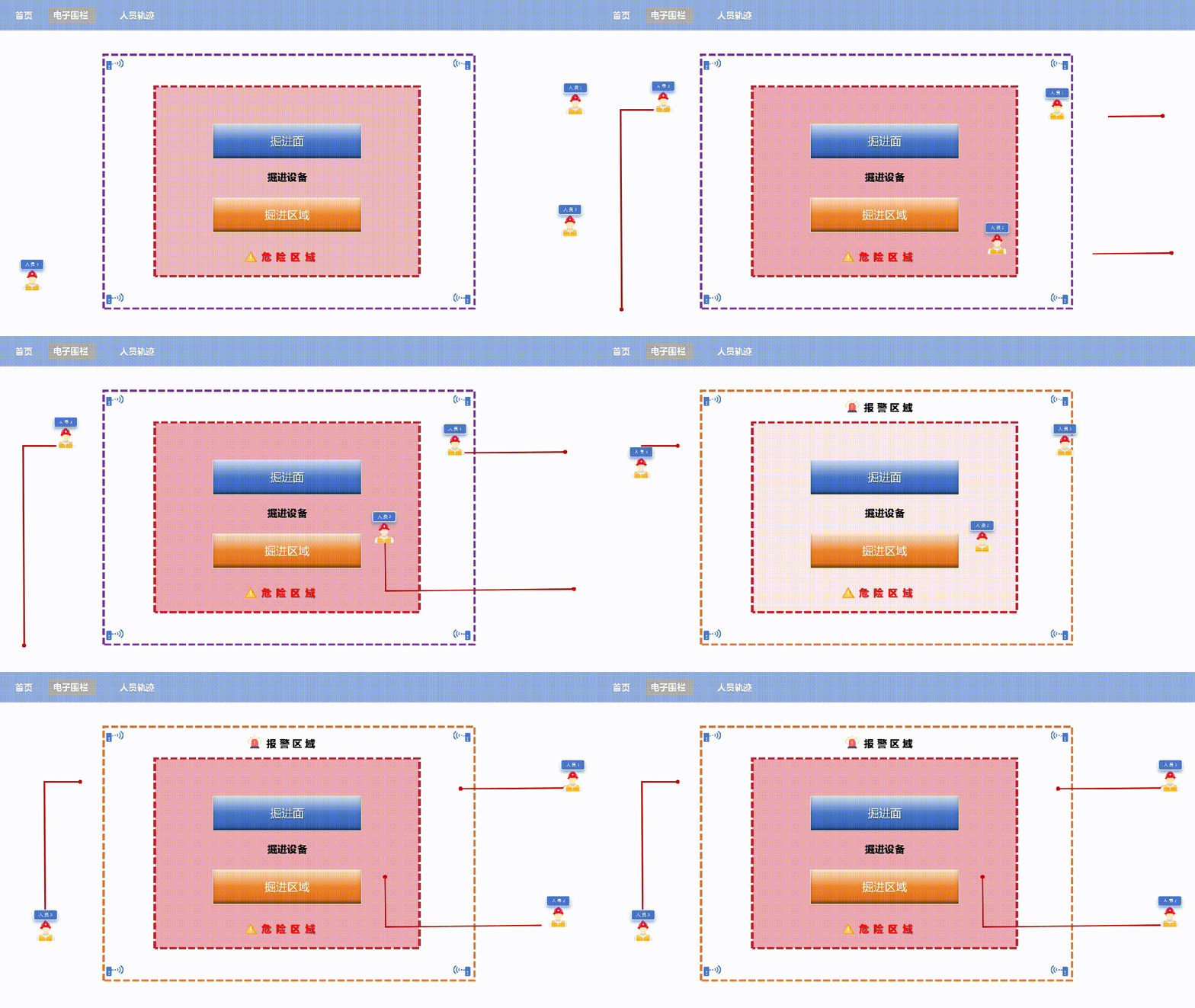
The electronic fence function is a major highlight of the system, acting like an "invisible fence" set up around hazardous areas. The system can flexibly define hazardous areas, such as heading faces, and formulate corresponding alarm rules based on actual needs. When personnel approach hazardous areas, the system immediately issues an alarm prompt, reminding personnel to pay attention to safety. If personnel continue to approach and enter a more dangerous range (e.g., a configurable 5m range), the system will force a shutdown to prevent personnel from entering hazardous areas and ensure their safe activities. This proactive safety protection mechanism effectively reduces the risk of safety accidents.
SOS Alarm and Paging: The "Express Lane" for Emergency Situations
In underground operations, various emergency situations may arise. Field personnel can send SOS alarm information to the system via buttons on the positioning tags, and the system will immediately convey the alarm information to the monitoring room or back-end personnel, achieving real-time alerts. Meanwhile, monitoring room or back-end personnel can also send call instructions through the system to call specific personnel or conduct a group call. This two-way communication function provides a fast lane for handling emergency situations, enabling timely organization of rescue and coordination work to safeguard personnel's lives.
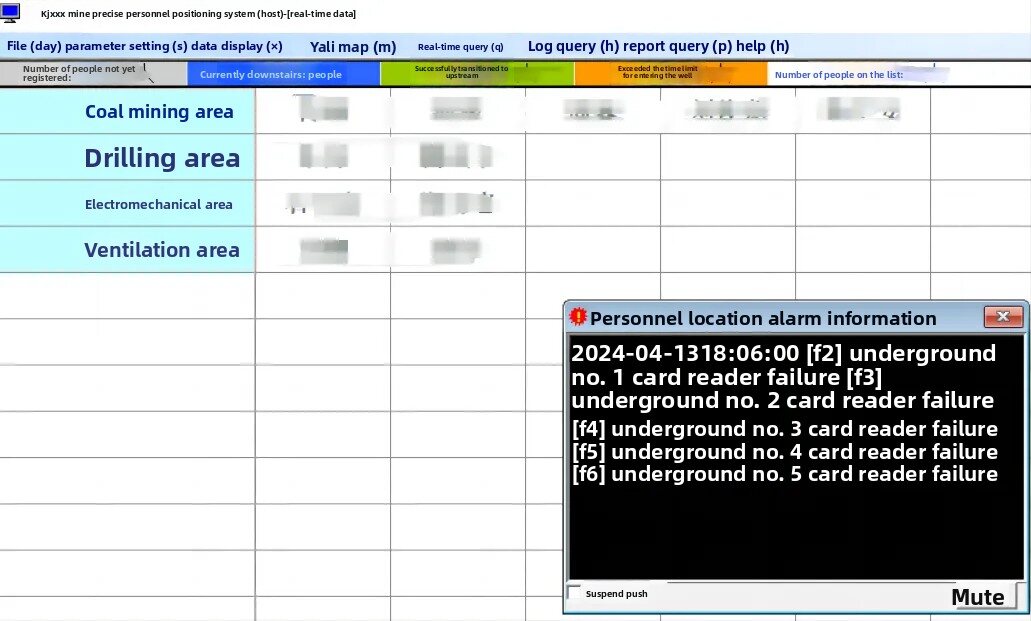
Historical Trajectory Storage and Playback: The "Intelligent Repository" for Incident Handling
The system has the capability to store personnel movement trajectories over the long term, acting like an "intelligent repository" that provides rich decision-making bases for incident handling. Whether for daily safety management or post-accident investigation and analysis, personnel's historical trajectories can be queried to understand their activities during specific time periods. Moreover, the system supports playing back personnel activity trajectories within specified time periods by card number or area, facilitating detailed analysis and research by monitoring personnel. For example, after a safety accident occurs, playing back the historical trajectories of relevant personnel can reconstruct their activities before the accident, identifying the causes and clues of the accident and providing strong support for accident handling.
Intelligent Attendance Collaboration: The "Capable Assistant" for Efficient Management
In addition to safety guarantee functions, the system can also collaborate with intelligent attendance systems, acting as a "capable assistant" for efficient management. Based on the data records output by the system, attendance areas can be custom-drawn, and departmental attendance shifts can be set. The system automatically determines cases of lateness and early departure and generates attendance reports automatically. It can also accurately record personnel's clock-in and clock-out times and on-duty times, providing accurate data support for enterprise attendance management and personnel performance evaluation.
V. Technological Advantages: A Solid Foundation for Superior Performance
The reason why UWB positioning technology stands out in the field of coal mine personnel positioning lies in its numerous superior technological advantages.
Low Power Consumption: A Guarantee for Long-term Operation
UWB technology features low power consumption, enabling positioning tags to operate stably for extended periods. This reduces the hassle of frequent battery replacements and lowers maintenance costs. Meanwhile, low power consumption also helps extend the service life of devices, improving system reliability and stability.
Strong Anti-interference Capability: Stable Operation in Complex Environments
In coal mine underground environments, various electromagnetic interferences and signal fading issues exist, such as multipath effects and non-line-of-sight propagation. UWB technology is insensitive to channel fading and has strong anti-interference capabilities, enabling stable operation in complex underground environments and ensuring the accuracy and reliability of positioning data.
Strong Penetrability: Precise Positioning Breaking through Obstacles
UWB signals have strong penetrability, allowing positioning in environments where signals penetrate obstacles such as a brick wall. Although data output requires certain corrections, this feature enables the system to achieve precise positioning in some underground areas with obstructions, expanding the system's application scope.
High Positioning Accuracy and Precision: The Core of Safety Guarantees
UWB technology boasts high positioning accuracy and precision, with an average positioning accuracy of less than 30cm, enabling precise grasp of personnel and asset positions. This is crucial for coal mine safety production, as it can promptly detect abnormal personnel positions and prevent and reduce the occurrence of safety accidents.
VI. Conclusion: Embarking on a New Journey of Coal Mine Safety Intelligence
The UWB-based personnel positioning system with electronic fence function represents a perfect fusion of technology and safety production. It not only meets the stringent requirements of policies and regulations for coal mine personnel positioning systems but also provides comprehensive and multi-level guarantees for coal mine safety production. Through powerful functions such as real-time personnel positioning, electronic fence, SOS alarm and paging, historical trajectory storage and playback, and intelligent attendance collaboration, the system achieves precise management and safety protection of personnel and assets underground.
Meanwhile, the inherent advantages of UWB technology, including low power consumption, strong anti-interference capability, strong penetrability, and high positioning accuracy and precision, provide a solid technological foundation for the stable operation and precise positioning of the system. Driven by policies and led by technology, the coal mine industry is embarking on a new journey of safety intelligence. The UWB-based personnel positioning system with electronic fence function will undoubtedly become a vital tool for coal mine safety production, playing a significant role in safeguarding miners' lives and the stable development of coal mines.
UWB positioning solution related products


