In numerous fields such as industrial production, commercial operations, and public safety, the demand for precise positioning of personnel and objects has become increasingly urgent. Traditional positioning methods often fall short in meeting the diverse needs of today's complex scenarios due to issues like insufficient accuracy, high costs, or complex deployment. Against this backdrop, a two-dimensional plane positioning solution based on UWB (Ultra-Wideband) positioning technology and the PDOA (Phase Difference of Arrival) algorithm has emerged. It offers significant advantages such as high precision, low cost, and easy deployment, providing a brand-new positioning solution for various industries.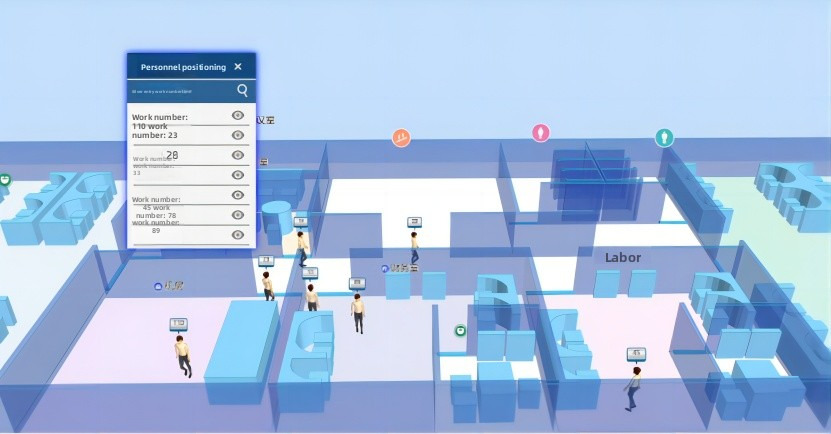
UWB technology is a wireless communication technology that transmits data by sending and receiving extremely narrow pulses on the order of nanoseconds to microseconds. This unique signal characteristic gives UWB extremely high time resolution, enabling it to achieve centimeter-level positioning accuracy. In a two-dimensional plane positioning system, UWB signals can propagate stably in complex environments, effectively resisting multipath effects and interference, providing a solid technical foundation for precise positioning.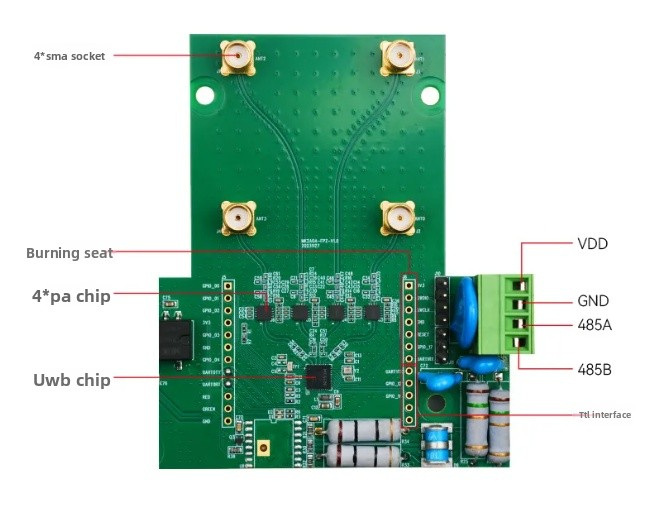

The PDOA algorithm calculates the position of a target by measuring the phase difference of a signal when it arrives at different antennas. In this solution, a single base station board is equipped with four antennas. Using the PDOA algorithm, a single base station can achieve precise two-dimensional plane positioning. This innovative design breaks the traditional model of multi-base-station positioning, significantly reducing the number of base stations and lowering system costs and deployment complexity.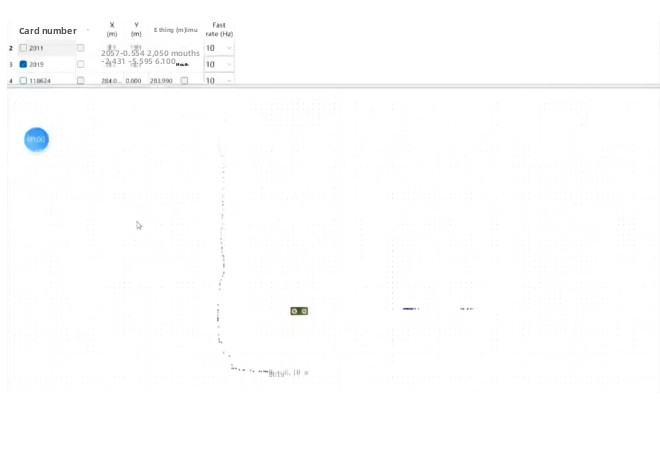
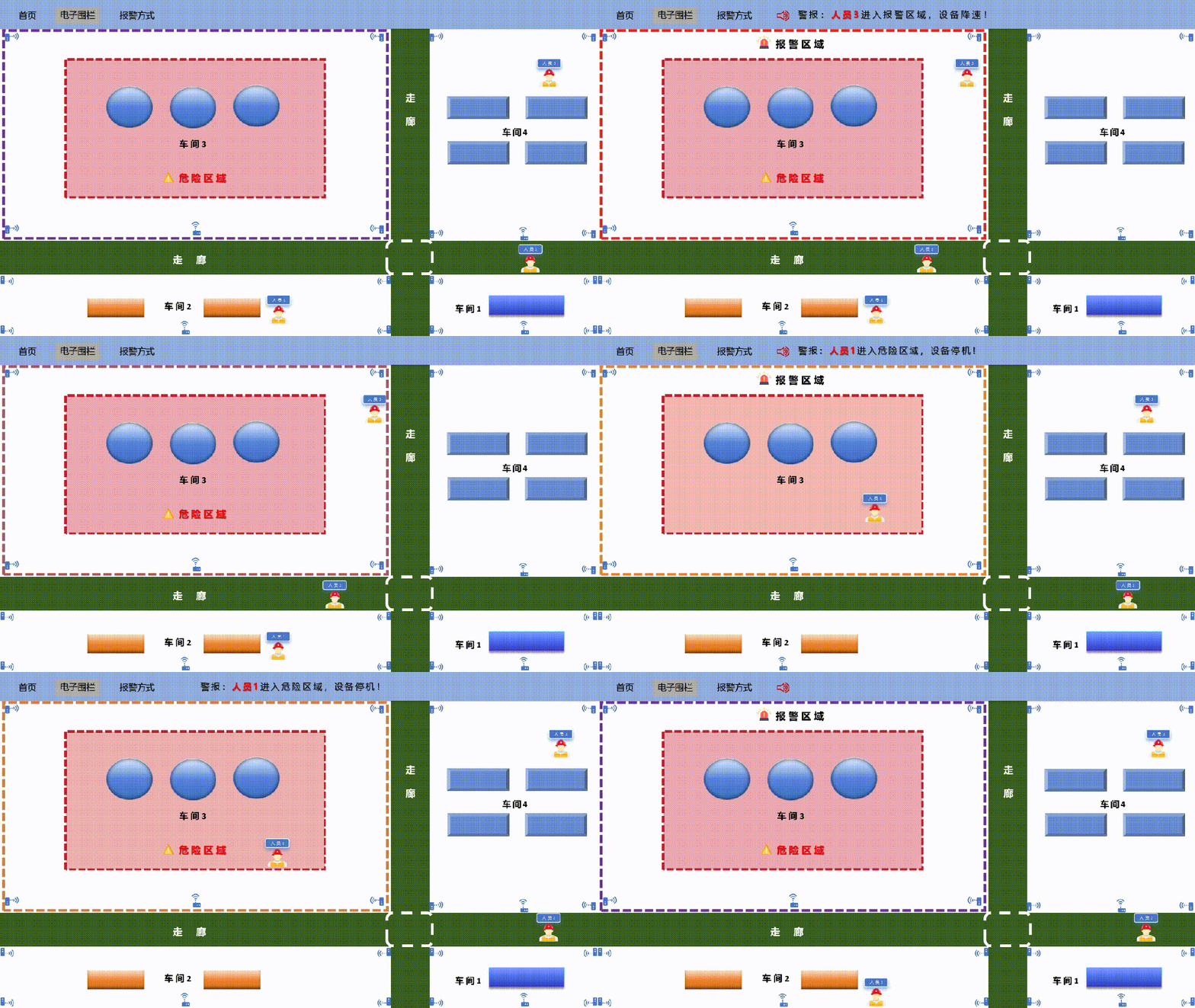
This solution can achieve a positioning accuracy of up to 30 cm, accurately obtaining the positional information of personnel or objects in a two-dimensional plane. In industrial production, it can precisely track the work positions of workers and optimize production processes. In commercial venues, it can real-time monitor the flow of customers, providing data support for precision marketing. In the field of public safety, it can quickly locate the positions of emergency personnel, improving rescue efficiency.
Compared with traditional multi-base-station positioning systems, this solution uses a single base station to achieve two-dimensional positioning, significantly reducing the number of base stations. This not only lowers hardware procurement costs but also simplifies the installation and debugging process of the system. At the same time, the single-base-station design makes the system more flexible, adaptable to various sites of different sizes and shapes, and reduces the difficulty and cost of site modification.
The base stations in this solution are equipped with 485 interfaces. This design allows the system to be easily integrated into various background systems, such as monitoring management systems and data analysis platforms. Through seamless integration with existing systems, real-time data sharing and interaction can be achieved, further enhancing the overall effectiveness of the system. Meanwhile, the 485 interface offers good stability and compatibility, ensuring reliable performance during long-term operation.

In factory workshops, this solution can real-time locate the positions of workers and monitor the progress of production processes. By analyzing the work trajectories of workers, production layout can be optimized to improve production efficiency. For dangerous areas such as high-temperature, high-pressure, and toxic and harmful areas, electronic fences can be set up to prevent workers from accidentally entering and ensure their safety.
In commercial venues such as shopping malls and supermarkets, the system can real-time monitor the flow of customers and understand their shopping habits and preferences. By analyzing trajectory data of customers, merchants can conduct precision-based product display and marketing activity planning, improving the shopping experience of customers and increasing consumption conversion rates.
In emergency rescue departments such as fire departments and police departments, this solution can quickly locate the positions of emergency personnel, improving the efficiency and accuracy of rescue command. In large-scale events, exhibitions, and other venues with a high density of people, electronic fences can be set up to real-time monitor the flow of people, promptly identify and handle potential safety hazards, and ensure public safety.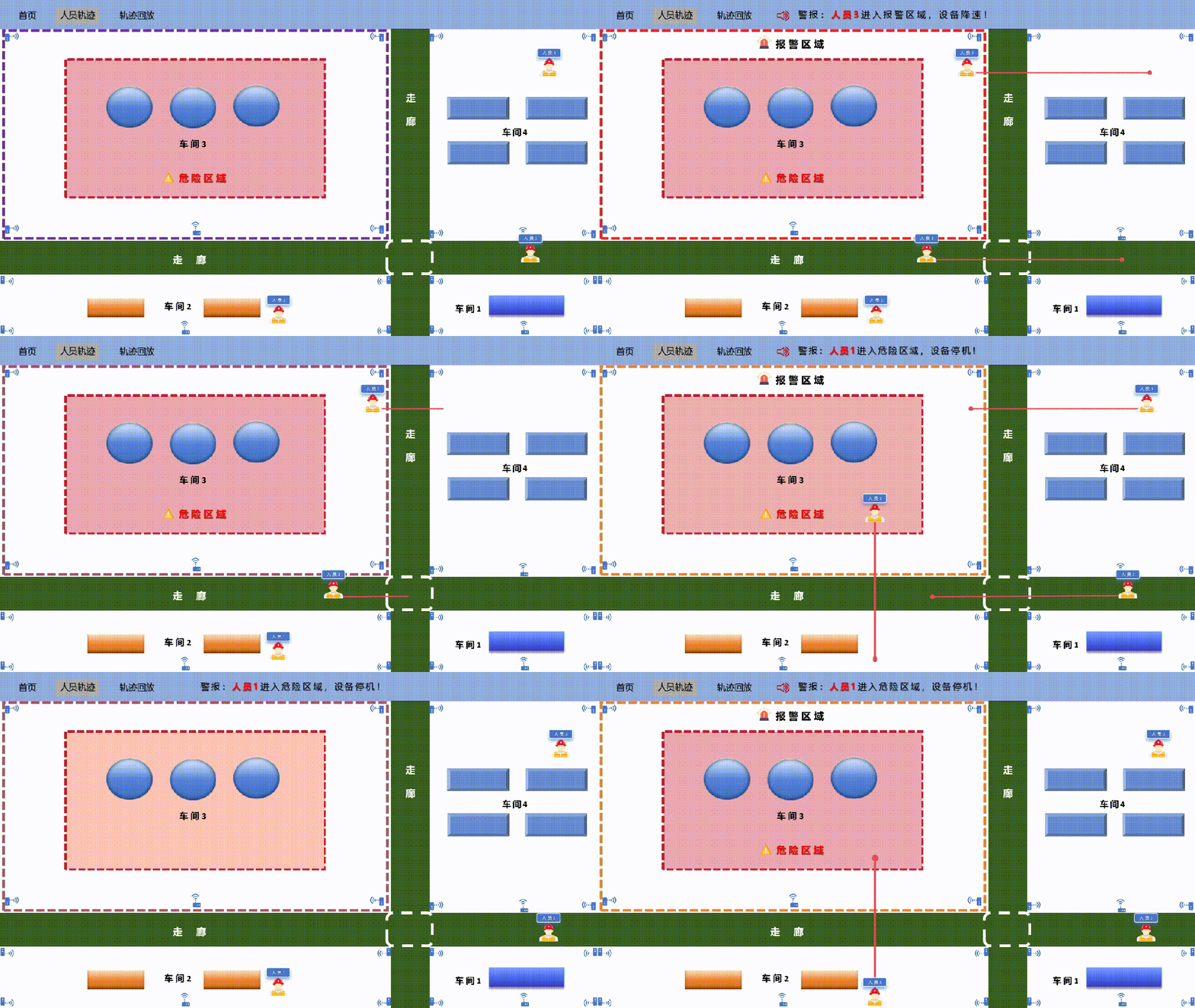
FR4PCB.TECH is a high-tech enterprise specializing in the research, development, production, and sales in the wireless RF field. The company has a research and development team composed of senior industry experts and outstanding engineers, who possess rich technical experience and innovative capabilities and can provide customers with comprehensive and customized solutions.
FR4PCB.TECH always adheres to a customer-demand-oriented approach, continuously investing in research and development resources to improve product performance and quality. The company's products cover multiple fields such as RF modules, UWB positioning, digital voice coding and decoding, and power sensors, and are widely used in industries such as industrial control, smart homes, intelligent transportation, and public safety.
In the future, Silicontrans Technology will continue to uphold the principles of innovation, professionalism, and service, continuously exploring new technologies and applications in the wireless RF field, providing customers with higher-quality and more efficient products and services, and working hand in hand with customers to create a better future.
UWB positioning solution related products


