The UWB technology has brought about a transformation in personnel positioning in coal mines. Its characteristics, such as high precision and strong anti-interference ability, are well-suited for the underground environment. The electronic fence can conduct real-time monitoring of hazardous areas. The system boasts a well-structured architecture and diverse functions. After being applied in a certain coal mine, safety and production efficiency have improved
UWB Technology Empowers Coal Mine Electronic Fence Positioning System: Building a Solid Defense for Workplace Safety
 I. The Dilemma of Coal Mine Safety and the Need for Solutions
Traditional Pain Points in Coal Mine Safety Management
In the coal mining industry, workplace safety has always been a looming Sword of Damocles. Traditional coal mine safety management methods are plagued with numerous drawbacks, posing as a bottleneck that restricts the safe development of coal mines.
In terms of personnel positioning, the positioning technologies relied upon in the past had limited accuracy, making it difficult to obtain real-time and precise information about the exact locations of underground personnel. In the complex underground environment, miners are widely distributed, and their work areas are constantly changing. Traditional positioning systems often suffer from significant positioning errors and delayed updates, preventing management personnel from accurately understanding personnel movements. In the event of an accident, it becomes challenging to quickly locate trapped individuals, thereby delaying rescue efforts.
Regarding the control of hazardous areas, traditional methods mainly rely on manual inspections and simple warning signs, lacking effective real-time monitoring and early warning mechanisms. Miners may inadvertently or deliberately enter dangerous areas, such as heading faces and gas accumulation zones, due to negligence or non-compliant operations. Manual inspections cannot provide round-the-clock, omnipresent monitoring, making it difficult to promptly detect and stop such dangerous behaviors, thus increasing the likelihood of safety accidents.
Policy-Driven Changes and Industry Transformation Needs
With the growing emphasis on coal mine safety by the state, a series of stringent policies and regulations have been introduced. The "AQ 1119—2023 General Technical Conditions for Underground Personnel Positioning Systems in Coal Mines," which came into effect on August 20, 2023, explicitly requires coal mines to be equipped with personnel positioning systems that meet the standards to enhance safety assurance. In 2024, provinces such as Shanxi and Guizhou further refined these requirements, stipulating that key locations like heading faces must be equipped with electronic fence functions, which can be implemented using various technologies such as LiDAR, UWB, and video analysis.
These policy introductions are like a timely rain, pointing out the direction for safe development in the coal mining industry and forcing coal mine enterprises to accelerate technological upgrades and management transformations. Coal mine enterprises urgently need an advanced positioning system that complies with policy requirements to improve safety management levels, safeguard the lives of miners, and achieve sustainable development.

II. UWB Technology: The Core Engine for Precise Positioning
Principles and Characteristics of UWB Technology
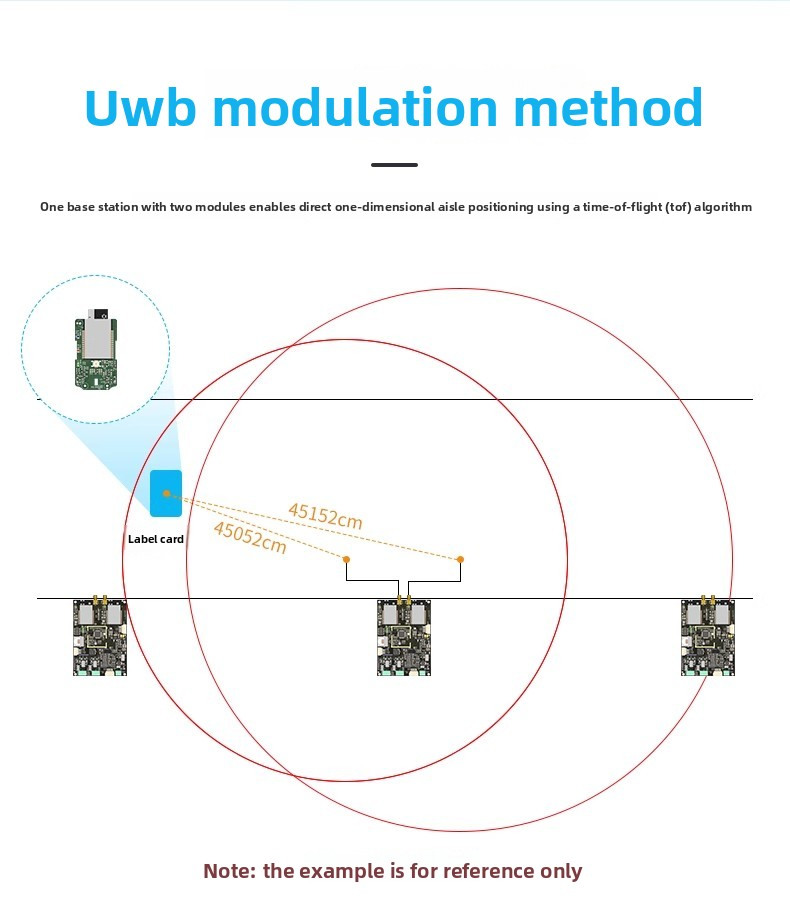
UWB (Ultra-Wideband) technology is a wireless carrier communication technology that does not use sinusoidal carriers but instead transmits data using nanosecond to microsecond non-sinusoidal narrow pulses. This unique signal form endows UWB technology with numerous outstanding characteristics.
In terms of positioning accuracy, UWB technology holds a significant advantage. Due to its extremely short pulse duration and high time resolution, it can achieve centimeter-level positioning accuracy, far surpassing traditional positioning technologies. In the complex environment of coal mine shafts, this high-precision positioning can accurately capture the location information of personnel and equipment, providing a reliable basis for safety management.
UWB technology also boasts strong anti-interference capabilities. Coal mine shafts contain various electromagnetic interference sources, such as motor operations and communication equipment. Traditional positioning technologies are prone to signal distortion and positioning errors under such interference. In contrast, UWB technology is insensitive to channel fading and can operate stably in complex electromagnetic environments, ensuring the accuracy and reliability of positioning data.
Additionally, the penetrability of UWB technology gives it a unique advantage in coal mine applications. Obstacles such as rocks and coal seams may exist underground. UWB signals can penetrate obstacles of a certain thickness for positioning. Although the signal strength may attenuate, relatively accurate positioning can still be achieved through reasonable algorithm corrections, expanding the system's application scope.
Adaptability of UWB Technology in Coal Mine Positioning
The complex and ever-changing environment of coal mine shafts imposes extremely high requirements on positioning technologies. UWB technology, with its inherent characteristics, can well adapt to the coal mine environment.
In terms of spatial layout, coal mine shafts are crisscrossed with numerous roadways, and work areas are scattered. UWB technology can achieve comprehensive coverage of the entire underground area by reasonably deploying base stations, enabling precise positioning in main roadways, branch roadways, and work faces.
For dynamic work environments, where personnel and equipment are constantly moving during coal mine production, UWB technology's real-time positioning capability can promptly track these dynamic changes, providing management personnel with real-time location information to facilitate timely adjustments in work arrangements and safety control.
Meanwhile, coal mines have extremely high requirements for the reliability and stability of equipment. UWB positioning devices are characterized by low power consumption, enabling long-term stable operation. This reduces the frequency of equipment maintenance and replacement, lowering operational costs.
III. Electronic Fence Function: Intelligent Guardian for Hazardous Areas
Working Mechanism of Electronic Fences
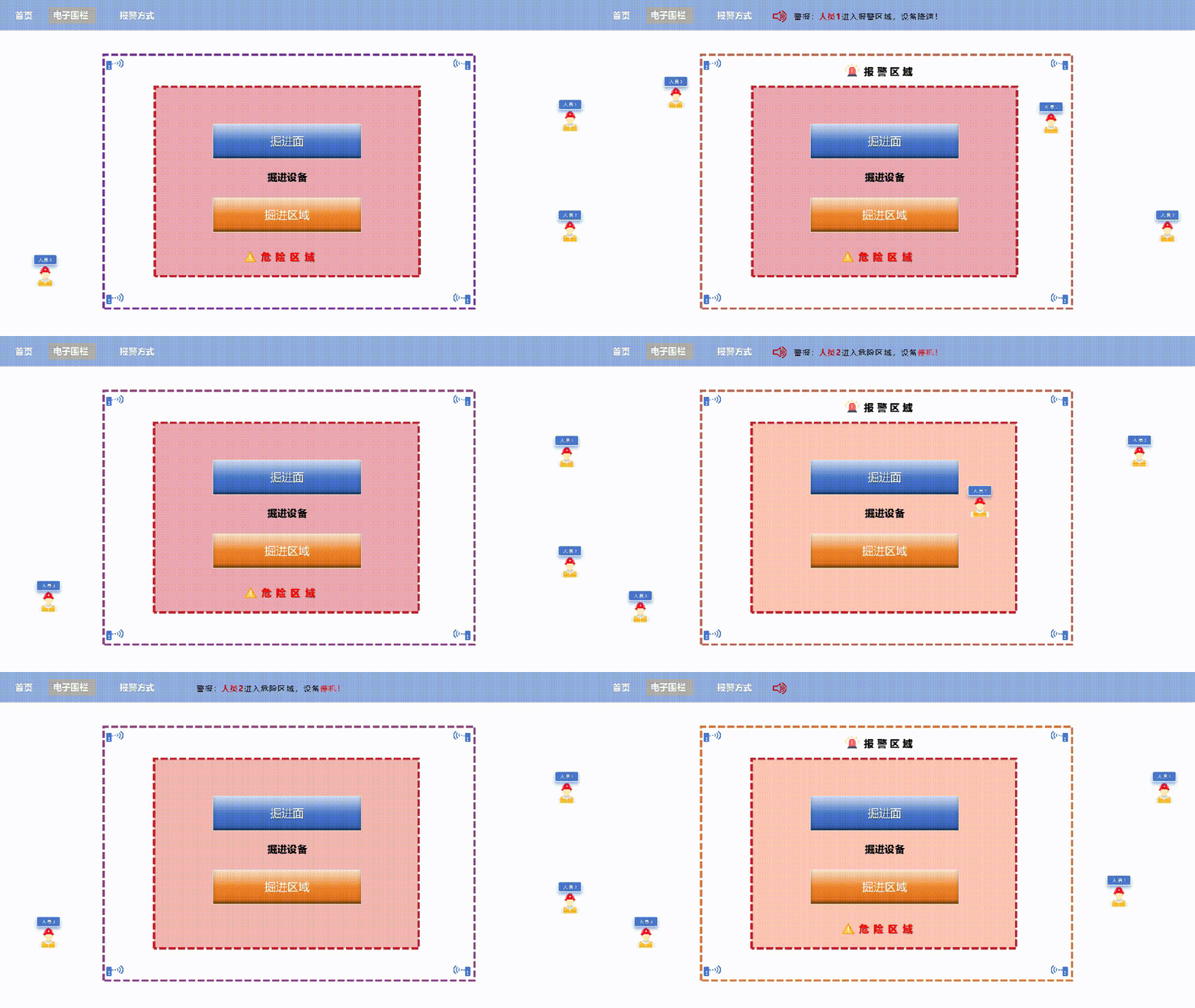
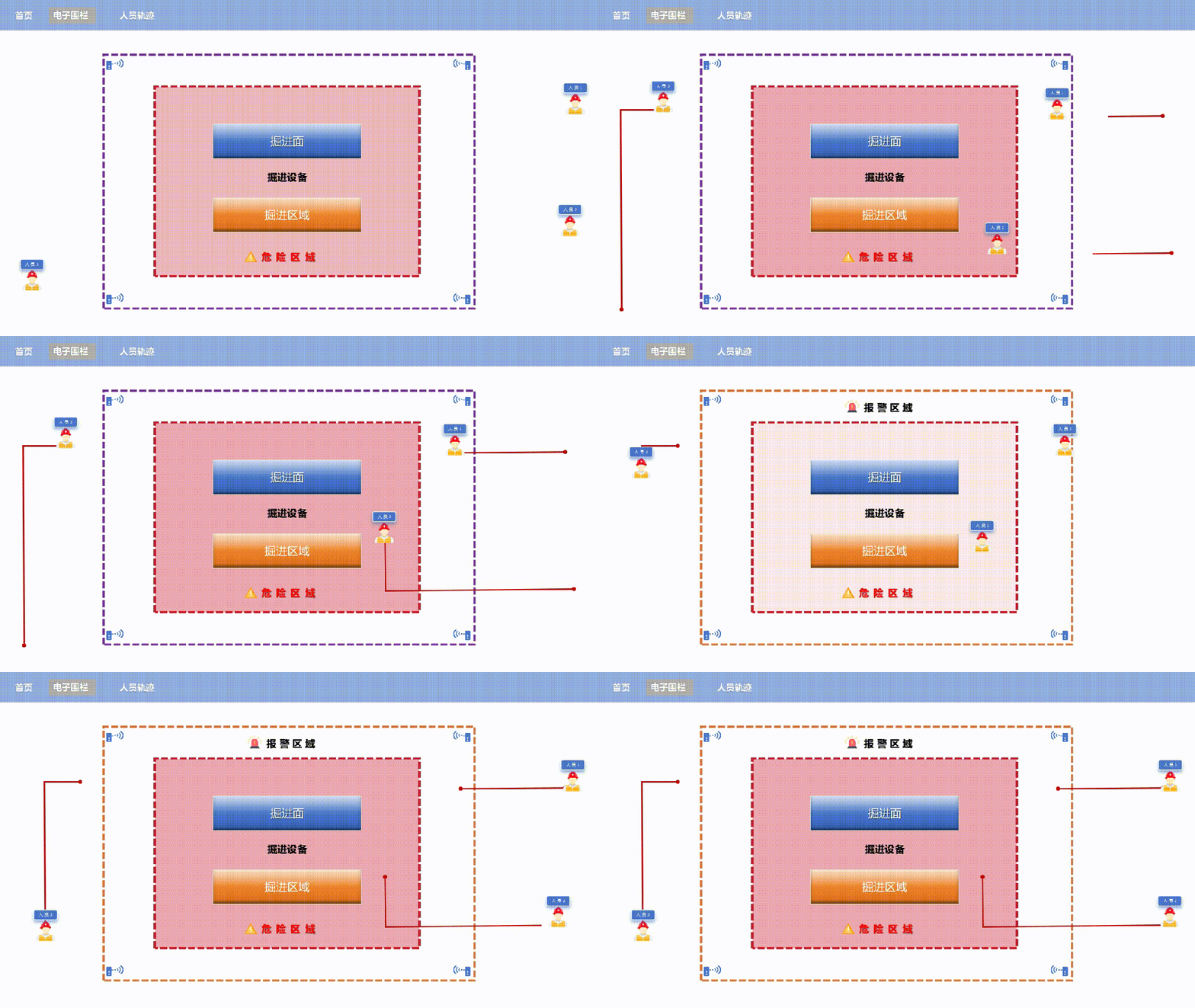
The electronic fence is an essential component of the UWB coal mine personnel positioning system. It establishes virtual hazardous area boundaries within the system to achieve real-time monitoring and early warning of personnel entering hazardous areas.
When a UWB positioning tag worn by personnel enters a designated hazardous area, the system immediately detects the relationship between the tag's location and the hazardous area boundary. Once personnel approach the hazardous area within a certain distance (configurable according to actual needs, such as a 5-meter range), the system triggers a Level 1 alarm, reminding personnel to be cautious through audio-visual prompts and SMS notifications. If personnel continue to approach and enter the hazardous area, the system triggers a Level 2 alarm and takes mandatory measures, such as stopping relevant equipment, to prevent personnel from further entering the hazardous area and avoid accidents.
Application Value of Electronic Fences in Coal Mine Scenarios
Electronic fences play a crucial safety assurance role in various coal mine work scenarios.
At heading faces, where hazards such as roof falls and gas outbursts may occur during the heading process, setting up electronic fences to delineate hazardous areas can effectively prevent personnel from entering unauthorized areas. When personnel enter these areas, the system promptly issues alarms and stops equipment, thus preventing personnel from encountering dangers.
In gas accumulation zones, gas is the number one enemy of coal mine safety. Electronic fences can continuously monitor whether personnel enter areas with excessive gas concentrations. Once someone enters, an alarm is immediately triggered, and measures are taken to avoid personnel casualties caused by gas explosions or poisoning accidents.
Furthermore, in equipment maintenance areas, electronic fences can prevent non-maintenance personnel from entering, avoiding personnel injuries caused by sudden equipment startup or improper operations.
IV. System Architecture and Functional Implementation
Hardware Composition of the System
The UWB coal mine personnel positioning system mainly consists of UWB base stations, UWB positioning tags, communication networks, and a monitoring center.
UWB base stations are the signal receiving and processing cores of the system. They are distributed at various key locations underground and are responsible for receiving signals emitted by positioning tags and transmitting them to the monitoring center. The base stations adopt an integrated design, featuring waterproof, dustproof, and explosion-proof functions to adapt to the harsh environmental conditions of coal mine shafts.
UWB positioning tags are worn by miners or installed on equipment to emit signals containing location information. These tags are compact, lightweight, and low-power, ensuring they do not interfere with miners' normal operations.
The communication network adopts a combination of wired and wireless methods to ensure stable signal transmission. In some underground areas, wired communication methods such as optical fibers are used to guarantee reliable and high-speed data transmission. In areas where wiring is inconvenient, wireless communication technologies like Wi-Fi and ZigBee are employed for flexible deployment.
The monitoring center is the management and control hub of the system, equipped with high-performance servers and monitoring software. It receives data from various base stations, processes and analyzes it in real-time, and displays personnel location information, alarm information, etc., on the monitoring screen for management personnel to make decisions and issue commands.
Software Functions of the System
The system software offers a wealth of functions, providing comprehensive support for coal mine safety management.
The real-time positioning and tracking function enables the real-time display of the location information of underground personnel and equipment. Management personnel can view the distribution of personnel at any time through the monitoring software and understand work progress.
The historical trajectory query function records the movement trajectories of personnel and equipment over a period. Management personnel can query the historical activities of personnel or equipment by entering a time range and identification numbers, providing a basis for accident investigations and safety analyses.
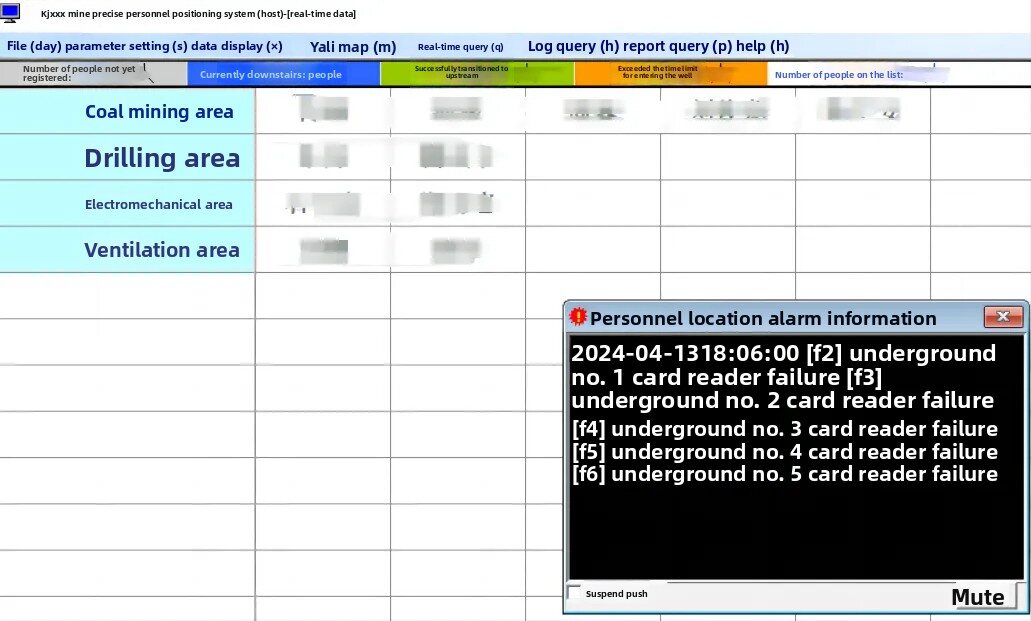
The alarm management function centrally manages various alarm information, such as electronic fence alarms and SOS alarms. When an alarm occurs, the system immediately pops up an alarm window, displaying alarm types, locations, and times, and issues audio-visual prompts. Management personnel can promptly handle the alarm information and take corresponding measures.
The attendance management function, combined with the positioning system, accurately records personnel's clock-in and clock-out times and on-duty durations. By setting attendance areas and rules, the system automatically generates attendance reports, facilitating attendance management and salary calculations for enterprises.
V. Practical Application Cases and Effectiveness Evaluation
Case Introduction
A large coal mine achieved significant safety management results after introducing a UWB technology-based coal mine personnel positioning system with an electronic fence function. The coal mine had complex underground roadways and a large number of operating personnel, making safety management difficult in the past, with frequent accidents.
Before system deployment, a detailed survey of the underground environment was conducted, and UWB base stations were reasonably arranged according to work areas and hazard levels. Each miner was equipped with a UWB positioning tag, and the monitoring center software was customized to meet the coal mine's actual management needs.
Effectiveness Evaluation of the Application
In terms of safety management, the electronic fence function effectively prevented personnel from illegally entering hazardous areas after the system was put into operation. According to statistics, in the first three months of system operation, over 20 electronic fence alarms were triggered, promptly avoiding potential safety accidents. Meanwhile, the real-time positioning function enabled management personnel to quickly grasp personnel locations. In emergency situations, rescue times were shortened by more than 30% compared to the past.
In terms of production efficiency, the intelligent attendance function accurately recorded personnel attendance, reducing attendance disputes and improving the efficiency of attendance management. Additionally, by understanding personnel locations and work progress in real-time, management personnel could reasonably allocate resources and optimize work processes, increasing production efficiency by about 15%.
In terms of costs, although a certain amount of capital was initially invested in equipment procurement and installation, in the long run, due to the reduction in safety accidents, losses caused by equipment damage and personnel casualties were decreased. Meanwhile, the increase in production efficiency effectively controlled overall costs.
VI. Future Prospects and Development Trends
Technological Innovation Directions
In the future, UWB technology will continue to innovate and develop in the field of coal mine personnel positioning. On the one hand, positioning accuracy will be further improved. By optimizing algorithms and enhancing equipment performance, millimeter-level positioning accuracy can be achieved, providing more precise data support for coal mine safety management. On the other hand, deeper integration with other technologies will occur, such as combining with 5G technology for faster and more stable data transmission and integrating with artificial intelligence technology for intelligent analysis and early warning of personnel behavior and safety status.
Industry Application Expansion
In addition to the coal mining industry, positioning systems with UWB technology and electronic fence functions will find applications in more industries. In high-risk industries such as chemicals and metal smelting, these systems can achieve precise positioning and safety control of personnel and equipment, effectively preventing safety accidents. In large commercial complexes, airports, railway stations, and other crowded places, the systems can be used for personnel evacuation guidance and safety monitoring, enhancing public safety levels.
The UWB technology-empowered coal mine electronic fence positioning system has brought new opportunities and transformations to coal mine safety production. Through precise positioning, electronic fence protection, and comprehensive system functions, it has effectively improved the safety management level of coal mines and safeguarded the lives of miners. With continuous technological innovation and application expansion, this system will play a more significant role in more fields, making greater contributions to industrial safety and social stability.
UWB positioning solution related products

 I. The Dilemma of Coal Mine Safety and the Need for Solutions


