Difference Between PCB Fabrication and PCB Assembly Explained
When entering the world of electronics manufacturing, two terms often cause confusion: PCB fabrication and PCB assembly. While they are closely related—and both essential to creating a functional circuit board—they represent distinct stages in the production process with different technologies, equipment, and expertise required.
Understanding the difference isn’t just academic—it’s critical for effective communication with suppliers, accurate quoting, realistic project planning, and avoiding costly delays. In this guide, we break down each process clearly, highlight their key differences, and explain why choosing the right partner for both can accelerate your product development.
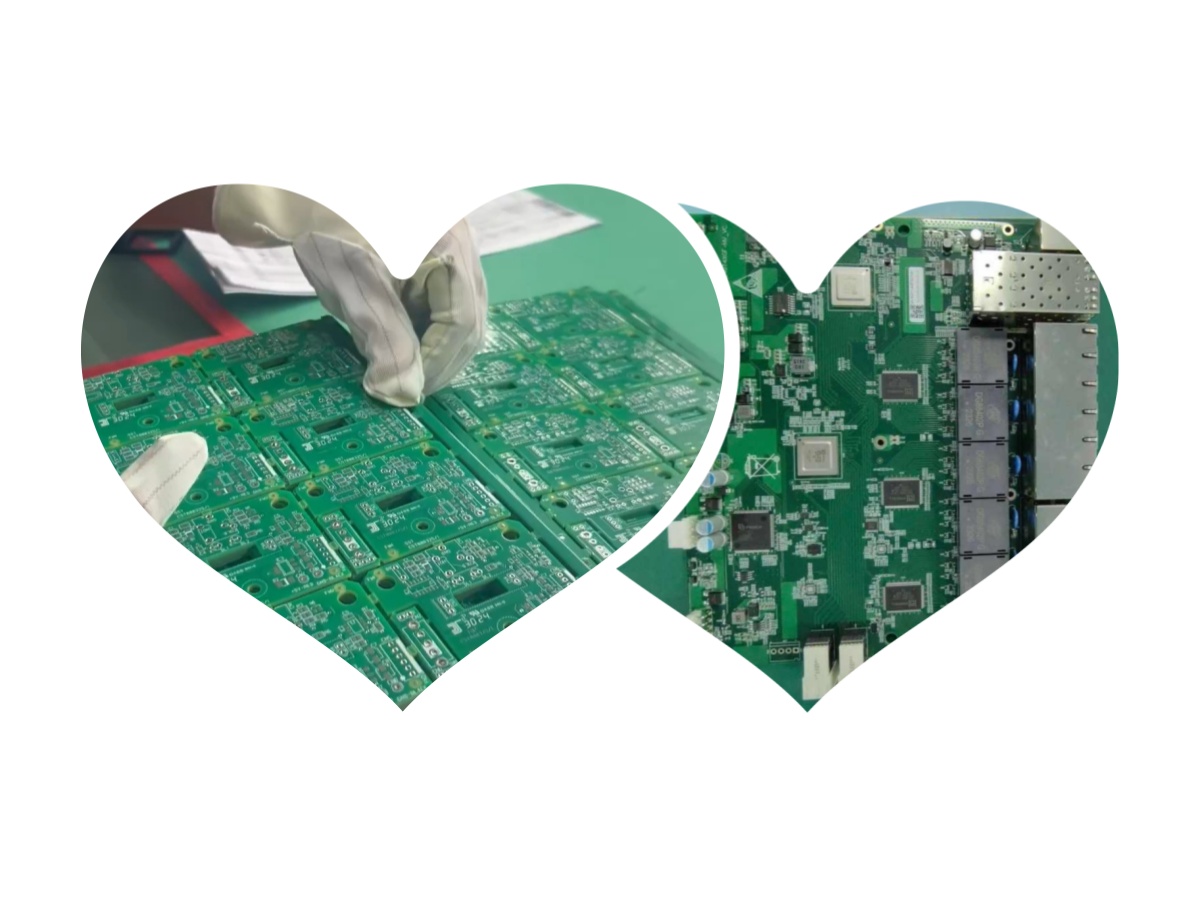
What Is PCB Fabrication?
PCB fabrication (also called PCB manufacturing or bare board production) is the process of creating the physical printed circuit board itself—without any electronic components attached.
Think of it as building the “canvas” or “roadmap” on which electrical signals will travel. The output is a bare PCB: an insulating substrate (typically FR-4) with precisely etched copper traces, pads, vias, and solder masks.
Key Steps in PCB Fabrication:
- Design Review & DFM Check – Ensuring the Gerber files are manufacturable.
- Substrate Preparation – Cutting and cleaning the base material (e.g., FR-4, Rogers, polyimide).
- Copper Lamination – Bonding copper foil to the substrate.
- Imaging & Etching – Using photolithography or LDI (Laser Direct Imaging) to define trace patterns and remove excess copper.
- Drilling & Plating – Creating holes (through, blind, buried) and plating them for electrical connectivity.
- Solder Mask Application – Adding a protective polymer layer (usually green) to prevent shorts.
- Silkscreen Printing – Labeling component references, logos, or polarity marks.
- Electrical Testing (E-test) – Verifying continuity and isolation.
- Final Inspection & Packaging
✅ Output: A bare, unpopulated PCB ready for assembly.
What Is PCB Assembly (PCBA)?
PCB assembly, or PCBA, is the process of soldering electronic components onto the fabricated PCB to create a functional electronic module.
This stage brings the board to life by mounting resistors, capacitors, ICs, BGAs, connectors, and other parts according to the schematic and placement files (e.g., centroid file).
Key Steps in PCB Assembly:
- Solder Paste Application – Stencil printing paste onto pads (for SMT).
- Component Placement – High-speed pick-and-place machines position parts accurately.
- Reflow Soldering – Heating the board to melt solder and form electrical/mechanical bonds.
- Through-Hole Insertion (if needed) – Manual or automated insertion of leads.
- Wave Soldering or Selective Soldering – For through-hole components.
- Cleaning & Conformal Coating – Optional steps for reliability in harsh environments.
- Inspection & Testing – AOI (Automated Optical Inspection), AXI (X-ray for BGAs), ICT, or functional testing.
✅ Output: A fully functional, tested, and ready-to-deploy electronic assembly.
Key Differences at a Glance
| Aspect |
PCB Fabrication |
PCB Assembly (PCBA) |
| Goal |
Create the bare board |
Populate the board with components |
| Input Files |
Gerber, drill, netlist |
Gerber + BOM + Centroid + Assembly Drawing |
| Core Materials |
Copper, FR-4, solder mask |
Resistors, capacitors, ICs, solder paste |
| Key Equipment |
Etching lines, LDI, plating tanks |
Pick-and-place machines, reflow ovens, AOI/AXI |
| Quality Focus |
Trace integrity, layer alignment, impedance |
Solder joint quality, component placement accuracy |
| Certifications |
UL, ISO 9001, IPC-6012 |
IATF 16949, ISO 13485, IPC-A-610 |
💡 Pro Tip: Many companies outsource fabrication and assembly to separate vendors—but working with a single-source provider reduces handoff errors, speeds up iteration, and simplifies accountability.
Why the Distinction Matters for Your Project
- Cost Control: Fabrication costs depend on layer count, material, and tolerances; assembly costs depend on component count, package types (e.g., BGA), and test requirements.
- Lead Time: A 6-layer HDI board may take 5 days to fabricate but only 2 days to assemble—or vice versa for simple boards with complex components.
- Design Feedback: A good fabricator will flag issues like insufficient annular rings; a good assembler will warn about unplaceable 01005 parts or thermal imbalances.
- Risk Mitigation: Misalignment between fab and assembly specs (e.g., pad size vs. component footprint) causes field failures. Integrated partners catch these early.
FR4PCB.TECH: Your Integrated Partner for Seamless PCB Fabrication & Assembly
At FR4PCB.TECH, we bridge the gap between fabrication and assembly with vertically integrated capabilities, ensuring your design moves smoothly from concept to reliable, high-volume production—without finger-pointing or delays.
🔬 Advanced Fabrication Capabilities
- Ultra-fine features: 2mil/2mil trace/space for cutting-edge HDI
- Precision microvias: 0.1mm laser-drilled stacked/staggered vias
- Impedance control: ±3Ω tolerance for high-speed digital & RF
- In-house FR-4 R&D lab: Custom material formulations for thermal, mechanical, and cost optimization
⚙️ Intelligent Assembly Excellence
- Mixed-technology support: SMT, through-hole, press-fit, and conformal coating
- High-reliability processes: 3D X-ray inspection for BGA void analysis, ±5μm rework accuracy
- Authorized component sourcing: Zero counterfeit risk with full supply chain traceability
🌐 End-to-End Advantage
- One-stop service: From stack-up design → fabrication → PCBA → box-build
- DFM/DFA co-engineering: Identify risks before production begins
- Rapid turnaround: 24h bare PCBs, 48h assembled prototypes
- Global compliance: Certified to IATF 16949 (automotive), ISO 13485 (medical), UL, RoHS, REACH
With 12+ years of experience solving high-difficulty challenges for 1,000+ clients worldwide—including leaders in aerospace, medical, automotive, and industrial IoT—FR4PCB.TECH is more than a manufacturer. We’re your technical extension, committed to making complex circuits simple.
👉 Ready to streamline your next hardware project?
Contact us today for a free DFM review and rapid quote—because seamless integration starts with the right partner.
FR4PCB.TECH – Where Precision Meets Partnership.


